

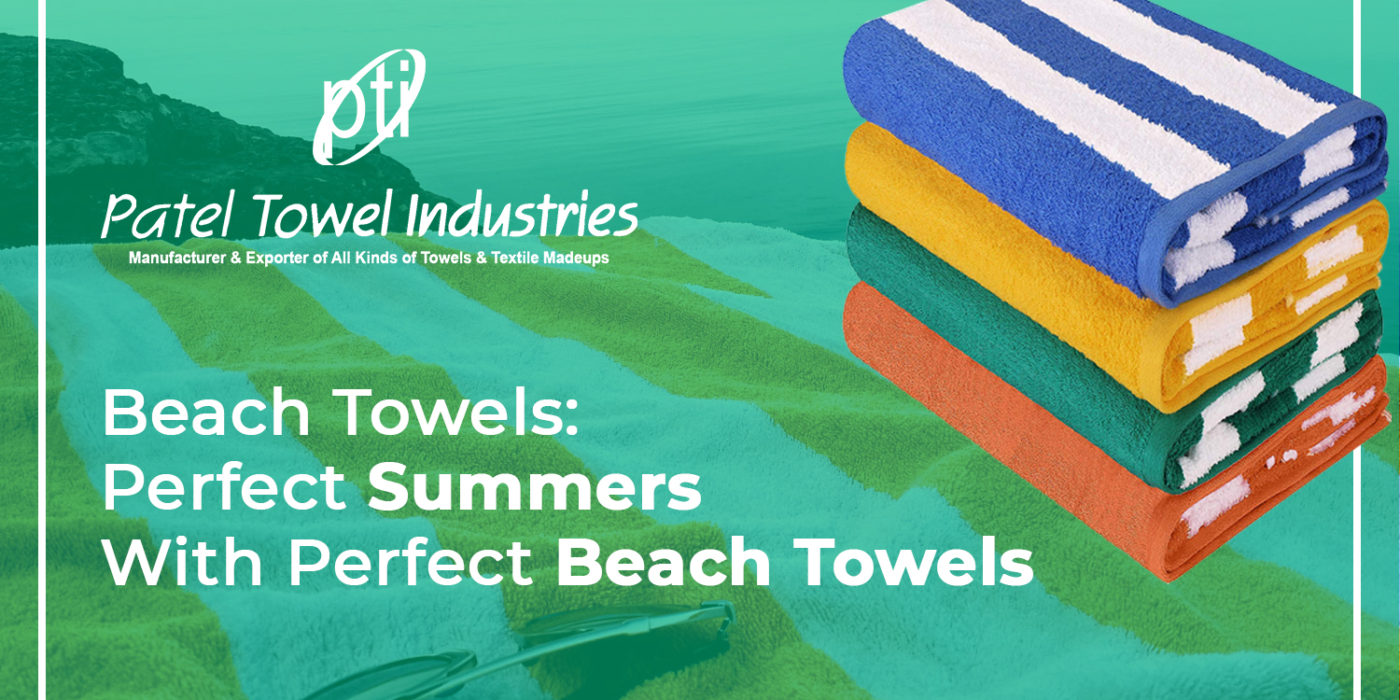
Imagine yourself relaxing on the beach, and you probably aren’t visualizing a scratchy towel or an overly wet seat. Instead, you want a fluffy beach towel that stays dry and keeps you protected from the hot sand. Here, you’ll learn some tips on how to find the best beach towels for your perfect trip to the beach, with advice on how to keep your towel and you feeling fresh.
What Is a Beach Towel?
Beach towels are water-absorbent towels you can use for activities like drying off after splashing in the water or relaxing under the sun. The perfect beach towel has a high water-absorbing rate and can quickly shake off any sand that gets stuck. Beach towels are lighter and large than most other towels and come in different fun colors and designs, especially eye-catching patterns.
Difference Between Beach Towels and Bath Towels?
While bath towels are for bathroom activities like drying off after a shower, covering up and wrapping your wet hair, Beach Towels support you during the days of summer, sand, and surf. Because these towels aren’t for the same purposes, there are some differences.
- Absorbency: Bath Towels and Beach Towels are absorbent. The difference lies in how they hold water — you want beach towels to have a higher water-absorbent rate they don’t become overly soggy. If a beach towel gets too wet, you’ll feel like you’re sitting on soaked fabric, and the sand will be harder to shake off.
- Size: Beach towels are large than Bath towels, sitting at around 38 inches long and 58 inches wide. Comparatively, bath towels are about 22 inches long and 44 inches wide. That’s because beach towels are large enough to cover your entire body while you’re relaxing on the sand. Bath towels only keep you warm and dry after a shower.
- GSM: Beach towels are thinner and lighter than bath towels. They have a lower number of grams per square meter, a measurement used to represent the thickness of towels and weight. Beach towels rest between 300 to 400 GSM, while Bath towels are slightly higher, ranging from 400 to 600 GSM.
- Price: Because beach towels are large and less common, they tend to cost high than bath towels.
Perfect Beach Towel Factors
When shopping for the best beach towel, here are some factors that may change your decisions.
Material
Most towels you find will consist of cotton or polyester. Cotton is a natural material with soft, absorbent qualities. Polyester is ideal for making towels more durable and long-lasting. There are three cotton variants.
- Pima: Crafted in the United States, Pima cotton is the most popular because it doesn’t require importing. It’s known for its long fibers that make towels feel elegant.
- Turkish: Like Pima cotton, Turkish cotton has long fibers — slightly shorter than Pima cotton — that make towels very soft and absorbent.
- Egyptian: Egyptian cotton, crafted in Egypt, is one of the more absorbent options. However, this material retains water for long periods, so it will stay moist after use.
Towel manufacturers favor Pima and Turkish cotton because they’re enough absorbent and dry faster than Egyptian cotton.
When searching for beach towels, you’ll find two options — 100% cotton and an 86/14 cotton-polyester blend. Polyester is a fabric made of synthetic compounds mixed with cotton to make a blend of 86% cotton and 14% polyester. Both are excellent choices for beach towels.
Weight and Density
Weight and density play essential roles in a towel’s absorbency. You calculate these using the rating Grams per Square Meter. When a towel has a high GSM, it looks thicker, feels denser, and requires more time to dry. Typical GSM measurements fall between 300 and 900.
- 300 to 400: A towel with a GSM between 300 and 400 is lightweight and dries faster. This range is ideal for beach towels, giving you enough support to dry off after a dip in the water.
- 400 to 600: In the middle of the spectrum are towels within the 400 and 600 GSM range. This range is most suitable for bath towels, giving them a denser feel that holds more water, but takes longer to dry than others within a smaller GSM range.
- 600 to 900: The thickest, most luxurious towels fall within the 600 and 900 GSM range. These make ideal hand towels but are not the best for bathing or beach activities because they hold too much water.
Absorbency
Along with weight and density, absorbency refers to a fabric’s ability to absorb water. Beach towels should take in a lot of water, but not hold onto it.
Consider how your beach and bath towels feel after you’ve used them. Bath towels are notable for their ability to hold water, yet they take a long time to dry. If you’ve ever had to re-use a wet bath towel in a pinch, you know how inconvenient it is. Beach towels, on the other hand, are thinner and do a better job of absorbing water; their low water retention rate reduces their drying time. So, if you sit on a wet beach towel, it won’t feel uncomfortable. And, once you’re ready to leave the beach, there will be less water to hold onto the sand, making it easier to shake out.
Aside from GSM, another role that plays into a towel’s absorbency is its pile, which refers to the number of upright loops in the fabric. These loops make a towel feel elegant. The longer the pile, the richer the towel feels. Piles also have twists. More twists indicate extra density and less absorbency. You want your beach towels to be absorbent, so it’s best to choose one that’s low-twist.
Size
Beach towels are more generously sized than bath towels. The average beach towel ranges from 30 inches by 58 inches and 30 inches by 56 inches, varying depending on the manufacturer. They’re large enough to cover your body without exposing you to the hot sand, but not too large to be a sheet. Whether you shop for a generously sized or smaller beach towel depends on your preferences.
Some Tips For Finding Perfect Beach Towel for You
Even if you know everything about buying the best beach towel, you may feel overwhelmed while weighing your selections. Here are some pointers to get you started in your search for the perfect beach towel.
Comfort is Prior Over Price
Though durable, cheap towels have short, twisted piles that can feel scratchy against the skin. High-quality towels are equally long-lasting, and their long and plusher loops will keep you comfortable throughout your day. Higher quality means slightly expensive but worth more than buying multiple cheap towels.
Always Go For Larger Beach Towels
Hot sand can be uncomfortable when you’re trying to relax on the beach. Ideally, you want a beach towel large enough to protect your whole body from the burning sand, including your feet. Depending on how tall you are, you may need a smaller or larger beach towel. And, even if you’re petite, you may enjoy the extra space of a large towel option.
You also want to consider other beach-lounging activities. Are you a fan of reading, listening to music, or enjoying a picnic lunch? You’ll want to have a beach towel roomy enough for your body and all your beach hobbies.
Pick a Pattern or Color You Love
Towels play a role in your beach fashion. If you’ve ever been shopping for a beach towel, you’re likely familiar with the rainbow of colors and imaginative designs. Shopping for beach towels is different than shopping for bath towels — you have the creative freedom to pick a bold color and design you’ll love showing off on the beach. By choosing an exciting pattern, you’re also more likely to continue using your towel over time, maximizing your investment.
Checklist for Picking the Best Beach Towel
Take this checklist with you when shopping for a beach towel.
- 100% cotton or 86 cotton / 14 polyester blend: Body-use towels usually consist of 100% cotton or an 86 cotton / 14 polyester blend. Cotton is naturally durable and soft, while polyester makes the fabric even more durable and long-lasting. Both are great options when buying a beach towel and will last you a long time.
- 300 to 400 GSM: When describing a towel’s weight and density, we use grams per square meter. The higher the GSM, the heavier and denser the towel feels. You don’t want your beach towel to feel too heavy, or it will retain a large amount of water and feel uncomfortable. The ideal GSM range for a beach towel is between 300 and 400 GSM.
- High water-absorbing rate: Closely related to GSM is absorbency, which describes how well fabric holds onto water. A beach towel should have a low water retention rate because it needs to dry quickly. That way, it won’t get too damp and feel uncomfortable to sit on.
- Size: Beach towels are large than bath towels, sitting at around 30 inches by 58 inches. Make sure yours is large enough to protect your body and other beach activities from the sand.
- Comfort: You don’t want to use a scratchy, thin, or otherwise uncomfortable towel. High-quality towels have longer piles with a low twist that makes the fibers feel more comfortable against the skin. Make sure to brush your hand against the towel before buying. You can quickly tell if the towel is comfortable enough for long-term use.
- Style: Abundant color and design options are some of the best things about beach towels. Choose a towel style that reflects your style and personality. With a design you love, you’ll want to use your towel on every beach trip, maximizing your return on investment.
Cleaning Your Beach Towel
Make sure your towel is completely dry and free of any sand before cleaning it. Sand is difficult to remove from wet towels, so do so before placing them in the washer or dryer. While it’s preferable to launder your towels using room-temperature water, it’s fine to use hot water on occasion for a more thorough clean. Go ahead if you don’t clean your towels often. go ahead and use the hottest water setting on your washer.
Here are three reliable cleaning methods to get your towels clean after an eventful beach day.
- Wash twice: The simplest method is to wash towels in two small, back-to-back loads. Put three to four towels in the washer with a moderate amount of detergent. After the first load, add more detergent and run again. Put the washed towels in the dryer and dry them thoroughly before putting them away.
- White vinegar: White vinegar is a natural cleaning ingredient with bacteria-fighting properties. Put three to four towels into the washer and add a cup of white vinegar. Run your washer on the hottest setting and move them into the dryer once finished. Make sure they’re fully dry before putting them away.
- Baking soda: When you need extra bacteria-fighting power, use baking soda along with white vinegar. Put your towels in the washer and start your first load using a quarter-cup of baking soda. After the first load, begin a second one using a cup of white vinegar. Put your towels into the dryer and dry them thoroughly before putting them away.
Shop Wholesale 100% Cotton and 86/14 Blend Towels at Patel Towel Industries
Patel Towel Industries is a customer-focused wholesale towel distributor. We have a highly diverse selection of towels, including pool towels, hand towels, bath towels, and fingertip towels. We’re your solution when you’re looking for reliable towels to impress your clientele, whether you own a beachfront business, hotel, or other commercial business.
We offer fast shipping and secure payment options — you can trust you’re getting quality towels and service through every step of the process. Browse our product page online and explore everything we have to offer. When you find something you love, add it to your shopping cart and place a wholesale order today.